- Client-centered care
- Skills-based tools
- Trauma informed approach
About Karen
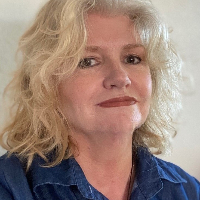
Karen McGuffey is a Licensed Marriage and Family Therapist (LMFT) with 15 years of experience in community mental health. She offers a warm, respectful space where people can talk about what feels stuck and start to make small changes. Her approach centers on meeting each person where they are and building toward goals together.
Clients often come for help with stress, anxiety, depression, grief, addiction, and trauma. Karen also supports people facing relationship and intimacy concerns, sleep problems, career stress, and compassion fatigue. She addresses issues like codependency, attachment struggles, and managing life changes in everyday terms.
Her work blends practical skills and deeper exploration. She uses client-centered methods to follow what matters most to the person in the room. She draws on cognitive behavioral tools to spot unhelpful thinking and on dialectical skills to manage strong emotions.
For trauma and painful memories she uses EMDR techniques alongside other approaches to reduce distress and improve daily functioning. Existential therapy helps people clarify values and meaning when life feels uncertain.
Sessions focus on clear steps and skills you can use between meetings, together with time to process feelings. Karen aims to make therapy straightforward and useful, whether the need is short-term coping or longer-term change.
How therapy approaches translate to online care
Client-centered therapy focuses on listening and following the person's priorities. Online sessions using this approach still center on what matters most to you and let the therapist guide conversations at your pace.Cognitive behavioral therapy, or CBT, helps people notice unhelpful thoughts and try different behaviors. Delivered online, CBT can include practical homework and short skill practices between sessions to support change in daily life.
Dialectical behavior therapy, known as DBT, teaches emotion regulation and distress-tolerance skills. These tools can be introduced in remote sessions and practiced during the week to help manage strong feelings and relationship strains.
Finding the right approach is part of the process. The therapist will work collaboratively to identify which methods fit your needs, goals, and preferences. That may mean trying an evidence-based skill for a few weeks or blending approaches based on what helps.
Because the therapist's session formats are not specified here, confirm current online options before booking. Online work can make it easier to fit meetings into a busy life, shorten commute time, and allow focused skill practice between sessions. Talk with the therapist about how to structure sessions to match your schedule and needs.
Areas of expertise
Also works with
Additional focus areas
Therapeutic approaches
Experience
15+ years
Credentials
California
Languages
English
Frequently asked questions
What concerns does Karen help with?
She helps with stress, anxiety, depression, grief, addictions, trauma and abuse, and related concerns such as codependency, self-esteem, and relationship issues.
What is her general therapy style?
She takes a client-centered, straightforward approach that mixes practical skills with deeper work. Sessions are collaborative and focused on what the person wants to change.
How much clinical experience does she have?
She has 15 years of experience working in community mental health settings, bringing that background into her current practice.
Where is she licensed and based?
She is a Licensed Marriage and Family Therapist listed as LMFT in California and practices from that state.
Which languages are available for sessions?
Sessions are offered in English.
Can people outside the U.S. work with her?
International clients are not currently accepted; sessions are provided to those within the supported region.
How are fees and payment handled?
Cost varies with location and therapist availability, and sessions use a subscription that can be canceled at any time.
How do I start working with her?
Select the Start Therapy button, complete a short matching questionnaire, and schedule according to therapist availability.
Profile details come from information the therapist supplied to BetterHelp. Credential and registration rules differ between the United States, the United Kingdom and Australia.